View Cart
  • Pricing
  • Solutions
    • Family Connections
    • People Search
    • REC Center
    • All Connected
    • Apple IOS App
  • Resources
    • How You Can Help
    • Pilot Report
    • Security Center
    • Support Articles
    • REC Center
    • FAQs
  • Insights
    • Success Stories
    • Press Releases
    • Events & Activities
  • University
    • Tutor Login
    • Student Registration
    • Dashboard
  • Donate
  • Request a Demo
  • Click to open the search input field Click to open the search input field Search
  • Menu Menu
  • Pricing
  • Solutions
    • Family Connections
    • People Search
    • REC Center
    • All Connected
    • Apple IOS App
  • Resources
    • How You Can Help
    • Pilot Report
    • Security Center
    • Support Articles
    • REC Center
    • FAQs
  • Insights
    • Success Stories
    • Press Releases
    • Events & Activities
  • University
    • Tutor Login
    • Student Registration
    • Dashboard
  • Donate
  • Request a Demo

Neuroplasticity & Relationships: A Path to Healing after Trauma
Categories: Public, Relational Health
Share
Share Course
Page Link
Share On Social Media

About Course

(1.5 general CE Credits)

This course is designed for social workers and others who support youth exposed to trauma. It covers brain development and how trauma affects behaviors in home and school environments. Professionals will learn that these behaviors result from brain pathways formed during traumatic events, including foster care. The course introduces neuroplasticity and the strategies to promote it, emphasizing the importance of relationships in the healing process. Understanding these concepts will help caregivers and professionals foster healing for youth who’ve been traumatized.

Learning Objectives:

  1. Recognize how trauma affects brain development, function, and behavior in youth, and how this understanding can inform how neuroplasticity is an important element in the healing process that begins with connections.
  2. Explain neuroplasticity and identify the role neuroplasticity plays in the brain healing from trauma.
    1. Analyze what a person needs in order for the brain to engage in this process.
  3. Emphasize the importance of relationships in healing:
    1. Recognize the critical role of supportive and consistent relationships to create an environment for neuroplasticity to occur.
  4. Analyze how relationships impact neuroplasticity and how this combination could be a pivotal part of the healing process for youth who have experienced childhood trauma and neglect.
    1. Describe strategies for promoting connectedness, trust, and positive relationships that encourage neuroplasticity and healing in youth who have experienced trauma.

Once the course is completed, you will be presented with a post-test and course evaluation that is mandatory to receive a certificate of completion and CEs.

Additional course and CE information can be found under the Resources tab.

Show More

Course Content

Impact of Trauma on Brain Development
This section explores the profound impact of trauma on brain development, emphasizing how early experiences and relationships shape brain circuitry. It delves into the three key brain systems, and how trauma can affect their functions and development, leading to challenges in motor skills, emotional regulation, and decision-making.

  • Impact of Trauma on Brain Development Video
    10:46

What Does This Look Like for the Youth We Serve?
It’s incredibly challenging to witness a youth grappling with trauma triggers and grief; their responses can be misunderstood. Yet, by truly grasping the intricate connection between trauma and the brain, we can offer the support they desperately need. This understanding is key to helping them begin their journey of healing and thriving.

  • What Does This Look Like for the Youth We Serve Video
    17:07

Neuroplasticity at Work
Neuroplasticity allows the brain to change, grow, and/or heal. This is an amazing aspect of the brain that spans a lifetime. Learn about activities, therapies and how supportive relationships encourage neuroplasticity.

  • Neuroplasticity at Work
    34:12

Quiz & Evaluation

  • Neuroplasticity & Relationships Post-Test
  • Neuroplasticity & Relationships Course Evaluation

Earn a certificate

Add this certificate to your resume to demonstrate your skills & increase your chances of getting noticed.
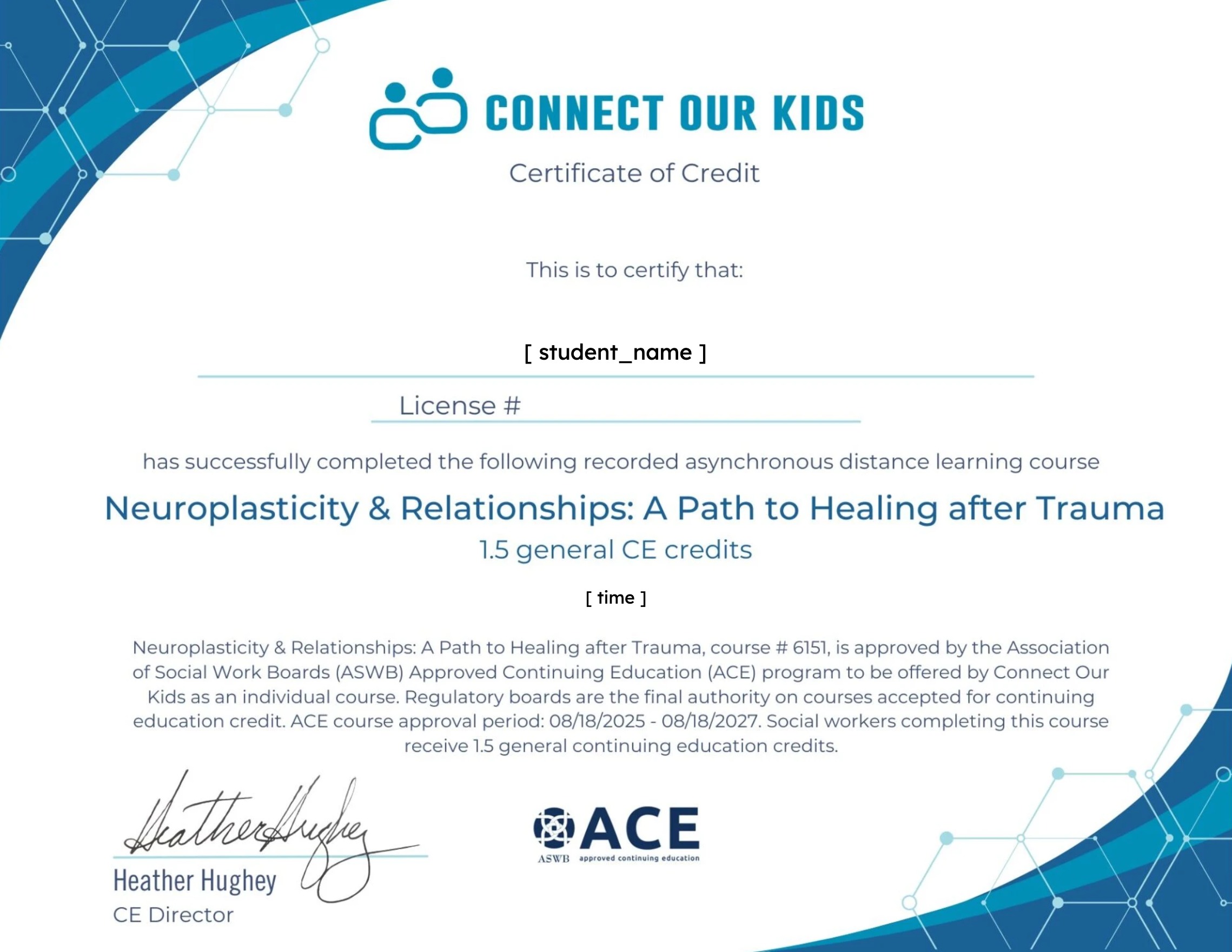
selected template
$14.99
  • All Levels
  • 5 Total Enrolled
  • Certificate of completion
Hi, Welcome back!
Forgot Password?
Don't have an account?  Register Now

A course by

CO
Connect Our Kids
AA
ACS Admin

Material Includes

  • Neuroplasticity & Relationships Bibliography
  • Neuroplasticity & Relationships Course Information
  • Grievance Policy
Connect Our Kids official logo - white version
  • Instagram Instagram
  • Facebook-circled Facebook-circled
  • X-twitter X-twitter
  • Linkedin Linkedin
  • Youtube-play Youtube-play

I Am A…

  • CASA Volunteer
  • Child Welfare Agencies
  • Family Recruiter
  • Social Worker
  • Fellow Non-Profit
  • Donor

Resources

  • How Can You Help
  • Pilot Report
  • Security Center
  • Support Articles
  • REC Center
  • FAQs

Solutions

  • Family Connections
  • People Search
  • All Connected
  • Apple iOS App
  • University

About

  • Our Team
  • Mission
  • Partners
  • Testimonials
  • Contact Us

Insights

  • Events & Activities
  • Success Stories
  • Press Releases

Subscribe to our newsletter

AICPA SOC compliance badge for non-CPA organizations

© Connect Our Kids, All Rights Reserved

Privacy Policy
Terms & Conditions
Link to: Why Relationships Matter Link to: Why Relationships Matter Why Relationships Matter
Scroll to top Scroll to top Scroll to top