Leaving the Sticky Notes Behind: Harnessing Innovation and New Technology to Help America’s Youth Succeed.
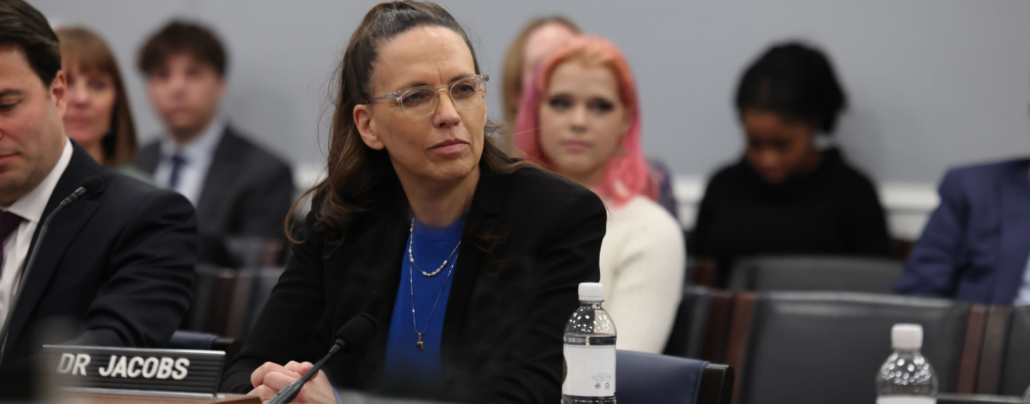
FALLS CHURCH, VA – November 2025 – On November 18th, Dr. Jennifer Jacobs, Connect Our Kids Co-Founder and CEO, testified before Congress at the House Ways and Means Subcommittee on Work and Welfare hearing on “Leaving the Sticky Notes Behind: Harnessing Innovation and New Technology to Help America’s Youth Succeed. Dr. Jacobs was one of four technology leaders within the child welfare space invited to give testimony about the role that technology can play in improving outcomes for children in foster care.
The hearing focused on the John H. Chafee Foster Care Program for Successful Transition to Adulthood, the program’s specific goal of helping foster youth find meaningful connections to supportive adults, and how technology can further this goal. Dr. Jacobs emphasized that “While technology can often do amazing things, its value is as a force multiplier, not as a force replacer, and is only valuable when it frees up humans to be more human in their relationships with each other. Relationships matter.”
Leaving the hearing, Dr. Jacobs commented: “One of the exciting aspects of being in this conversation is that it is very much bipartisan; both sides recognize that it makes both human and fiscal sense to get foster youth a stable start in life. Together, we can help states build family connecting programs that use technology tools, coupled with crucial training and education on why relationships matter, to keep kids connected to their people.”
Video of Dr. Jacobs’ full testimony can be viewed at https://www.youtube.com/watch?v=G0nojQnNTJw&t=3s.
Connect Our Kids is dedicated to helping child welfare professionals find extended family, build connections and create caring support networks for children and youth in the child welfare system. Their innovative tech tools are force multipliers for social workers, lawyers, family recruiters, and Court Appointed Special Advocate (CASA)/Guardian ad Litem (GAL) volunteers, and the tools dramatically increase the speed and scale of family search and engagement efforts, ensuring work is well-documented, organized, shareable, and secure.
Working in collaboration with America’s most forward-leaning child welfare thought leaders and guided by a team of advocates with lived experience in the foster care system, Connect Our Kids is revolutionizing the process of searching for and engaging with family and kinship connections. Connect Our Kids aims to give every child and youth in foster care the support and belonging needed to heal trauma and build a brighter future.
Contact: Heather Hughey, COO
Email: [email protected]
About Connect Our Kids
Connect Our Kids is a 501(c)(3) non-profit organization started in 2017 to apply modern technology to extended family search and engagement. The organization develops software tools, including People Search and Family Connections, to assist welfare professionals in helping children in foster care and other vulnerable groups and creates educational resources on the importance of relational health for use by welfare professionals, families, and care givers. The Connect Our Kids platform fills a much-needed gap in the child welfare system, accelerating the support and caring relationships that change lives and help heal trauma. Learn more at www.ConnectOurKids.org.
About the Chafee Program
The Chafee program provides funding to support youth and young adults in, or formerly in, foster care with their transition to adulthood. The program is funded through federal grants awarded to child welfare agencies in States (including the District of Columbia, Puerto Rico and the U.S. Virgin Islands) and participating Tribes.
Chafee funds are used to assist youth and young adults in a wide variety of areas designed to support a successful transition to adulthood. Activities and programs include assistance with education, employment, financial management, housing, emotional support and assured connections to caring adults.

